In the quiet hours of a rural morning, when the first light etches the hills and a well starts to murmur back to life, the reliability of the pump becomes a small but undeniable comfort. I’ve spent years working with deep well pumps, watching how they weather the bite of sand, the tangle of iron, and the stubborn insistence of drought. Goulds Deep Well Pumps have shown up in enough of those moments to earn their own place in practical, hard-won experience. This article isn’t a glossy sales pitch. It’s a grounded look at what makes these pumps stand up to real conditions, how to judge when they’re right for a job, and where the trade-offs lie once the system is installed.
A lot of what counts in the field comes down to design intent and the environment you’re asking the pump to operate in. A deep well pump isn’t simply a device that moves water; it’s a tool that has to align with well depth, water quality, electrical supply, and the daily rhythm of a property. In this article, you’ll find stories from the field, practical guidance born from hands-on use, and concrete considerations that can mean the difference between a year of steady service and a prolonged battle with a stubborn well.
The realities of deep well pumping begin with the well itself. A shallow understanding of suction and pressure can bluff you into thinking any pump will do. In practice, the deeper the well, the more the pump has to work to lift water from the dark, cool depths. That means more wear on components, more heat to shed, and a stronger need for precise matching between the pump, the motor, and the control system. Goulds has built a line of pumps designed to handle a spectrum of well depths, water pressures, and flows. The key is knowing which model fits your particular well profile, rather than buying on name recognition alone.
From the first moment you pull a Goulds deep well pump out of the crate to the day it sings reliably again after a power outage, you’re negotiating two kinds of reliability: endurance in the field and predictability in the system design. Endurance isn’t flashy. It’s the pump continuing to deliver the same flow rate after a season of sand, a few hard frost cycles, or a damp spring when the water table is churning and unpredictable. Predictability means the pump starts within seconds of the switch, maintains the rated head, and doesn’t surprise you with sudden noise or heat. These are not abstract goals. They translate to less downtime, fewer service trips, and a calmer household or farm operation.
One practical truth from experience: pump selection should start with the well’s actual conditions, not a brochure’s promise. I’ve run into wells that looked fine on a couple of quick tests but hid stubborn challenges under the water line. Some wells carry a lot of iron or manganese; others bring in silt or sand that likes to wear away at the impellers and seals. The Goulds line offers stainless steel components and alloy options aimed at resisting corrosion and abrasion, but those advantages only matter if you’ve matched the right model to the water’s chemistry and the well’s yield characteristics. This is where field data pays off. A well log, a few clean-water draws, and a quick pump test can save you from a mismatch that looks fine on paper but fails in practice.
The interplay between motor size, pump stage count, and the overall drive system shapes the experience of daily use as well. Deep well pumping is a system, not a single part. A powerful pump sitting on a shallow head, or a high-efficiency motor running into a pressure tank that’s too small, will give you excellent peak performance in fits and starts but will not sustain it. Conversely, an oversized motor with a modest well can stress the drive and burn more electricity than necessary. In my practice, the most reliable setups are those that balance a motor that aligns with the well's deliverable lift and consistency, with a control scheme that protects the pump from dry run, voltage sags, and thermal overloads.
Below are two realities that recur in the field and influence how you approach Goulds deep well pumps:

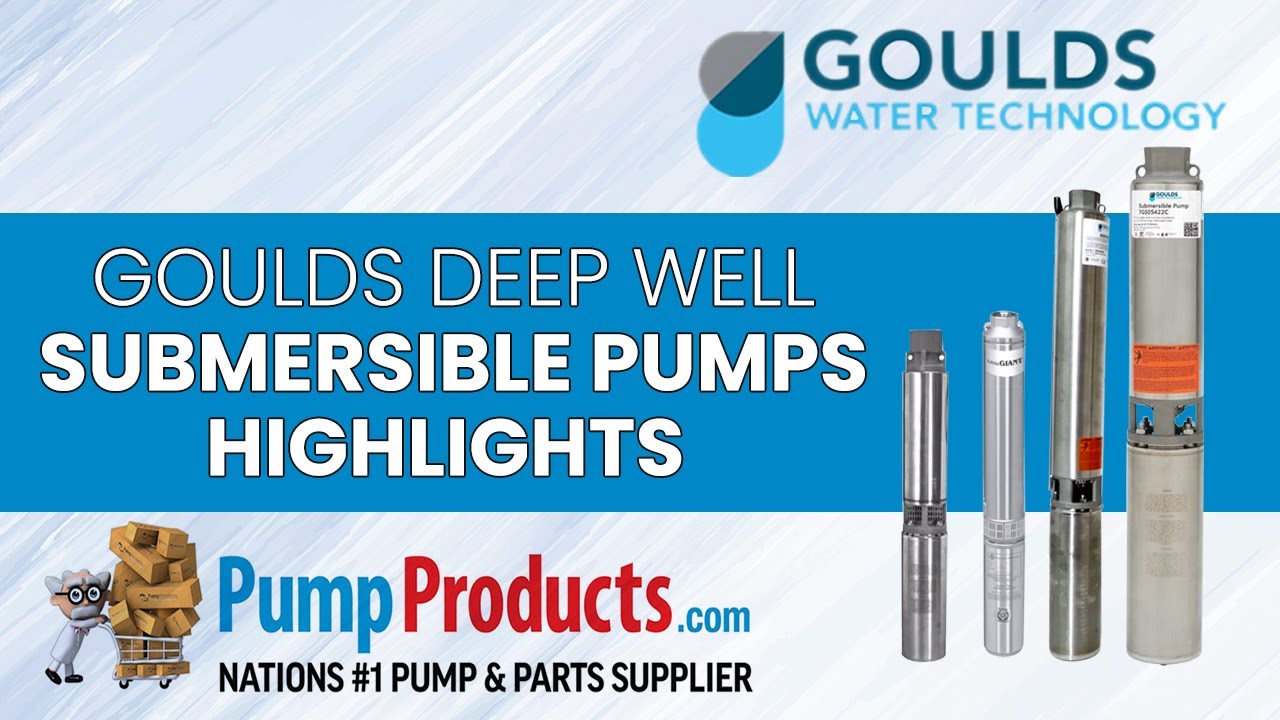
First, water quality and well construction matter more than most buyers expect. A pump is a moving component that lives in water and, more often than not, in a somewhat hostile environment. If a well has heavy sediment, restricted screen flow, or a history of iron bacteria, you’ll likely run the pump harder and replace parts more frequently than you would in a pristine groundwater source. Goulds pumps are built to stand up to tough conditions, but the longer the system operates at the edge of its design envelope, the more frequent the maintenance gets. The good news is that with proper impeller material choices and seal arrangements, those adjustments are manageable rather than catastrophic. The responsibility falls on the installer or homeowner to know the well and to choose materials that resist the particular kind of wear the water introduces.
Second, the reliability story isn’t only about the pump itself. The electrical supply, the control wiring, and the pressure tank all participate in the reliability equation. If voltage dips are common in a rural setting, a motor with a robust thermal protection scheme and a correctly sized pressure tank can prevent nuisance trips. If the pressure tank is undersized or the check valve leaks, you’ll see cycling that wears the pump out long before the mechanical components do. Reliability, in practice, is often about early, thoughtful system design as much as about the pump’s internal engineering.
Goulds runs a broad spectrum of deep well solutions, from small, low-flow units intended for modest water needs to more robust multi-stage configurations designed for deeper wells or higher lift. The choice often comes down to a few critical questions: How deep is the well? What is the flow you actually need under peak demand? What is the water quality like? What is the electrical supply and the available control strategy? where to buy goulds deep well pumps If you can answer those reliably, you’ve already narrowed the field to a handful of Goulds models that will perform predictably for years.
There’s a recurring truth to pump longevity that I’ve seen time and again. A good installation beats a technically perfect component installed poorly. A flawless pump on a poorly laid out system will fail sooner than a less impressive unit installed with thoughtful protection and proper integration. In the field, we make a point of addressing the entire chain: from well pump pit to the top of the pressure tank, through the valve train to the household taps. The moment you treat it as a system, you see fewer failures, steadier pressure, and longer service intervals.
When I’ve consulted on well projects, a pattern emerges in the questions customers ask about Goulds deep well pumps. They want to know about longevity under sand and grit, about corrosion resistance in challenging water, and about real-world service intervals. They also want to understand how to buy smartly. The last question is not the least important. In an era where parts availability and local service can be the difference between a weekend water outage and a worrisome dry spell, knowing where to buy Goulds deep well pumps and how to select the right model for your region matters almost as much as the specifications on a brochure.
Durability in harsh conditions often boils down to materials and construction choices. In deep wells that draw from sediment-laden or iron-rich sources, the choice of impellers and housings is not cosmetic. It’s functional. Stainless steel impellers, abrasion-resistant castings, and reliable seals earn their keep as the water wears away at moving parts over many years. The most robust configurations also use dual-seal arrangements and careful lubrication management to minimize leakage paths and extend seal life. These design choices may seem incremental, but they translate to meaningful differences when a well runs for weeks without a service call or when a storm knocks out power and the pump sits waiting in the still water of a caved-in well.
For the homeowner, the practical path to reliable deep well pumping with Goulds begins with honest sizing. It begins with a field test that checks lift and flow, the well’s recovery rate, and how the system behaves under demand. It includes selecting a pump with a motor that suits the available voltage and a control strategy that protects the pump during startup transients and voltage sags. It includes choosing the right pressure tank size so that you minimize short cycling, which is both bad for the pump and noisy for the house. And it includes a plan for maintenance that is doable in a rural setting, where service calls aren’t a daily event.
In the end, reliability is not a single feature; it is a balance of selection, installation, and ongoing care. Goulds deep well pumps have earned a reputation for reliability in harsh conditions because the company focuses on a closed loop of design intent and practical durability. But the most important stories come from real-world usage: the moment a heavy spring storm moves a countryside into a new rhythm, or when a drought tightens the water supply to a narrow, predictable trickle. It is in those moments that the true test of any pump is measured, not in the glossy spec sheet but in how readily the system recovers from a hiccup and returns to steady service once the power is restored and the well settles back into its normal cycle.
A few practical realities to remember as you consider Goulds and similar deep well pumping solutions:
- The drawdown and recovery rate of the well matters. A well that recovers slowly will require a pump with a controlled flow rate and a buffer in the system to smooth out the demand. This is particularly true in rural homes where irrigation and domestic use happen within the same day. The pump should be sized not just for peak demands but for average daily use, with enough margin to avoid exhausting the well in a dry spell. The water quality you face influences how you choose materials and seals. High iron, manganese, or sediment levels push you toward sleeves and impellers that resist wear and coatings that resist buildup. In some wells, a pre-filter stage, or a staged pumping approach that reduces the amount of abrasive matter entering the pump, can be a game changer. Control logic and protection save the pump in the long run. Dry-run protection, thermal overload protection, and proper sequencing with a pressure tank reduce the number of start-stop cycles. These protections are small investments in the field that pay back with years of more predictable service. Access to parts and service matters. Goulds is a recognized name because it has a long history in the water industry and a large network of distributors and service providers. The ability to obtain parts quickly and to have a technician who understands deep well systems can cut downtime dramatically. If you live in an area with few suppliers, it becomes even more important to choose a model with widely available components and robust local support. Installation quality makes a difference. The best pump on the market can be underperforming if it’s not installed correctly. Primers in the piping, proper alignment of the motor and impeller, correct cable sizing, and appropriate grounding are not mere formalities. They show up in the pump’s ability to start reliably, stay cool, and avoid leakage at seals and joints.
When it comes to deciding where to buy Goulds deep well pumps and how to select the right model, there are practical signals that can guide you. A reputable supplier will offer a range of Goulds products suitable for different depths and water qualities. They will be able to discuss the expected lift, the flow rate you need, and the type of motor that best suits your electrical supply. A good supplier will also help you consider the total cost of ownership: the initial price, the anticipated maintenance schedule, and the expected lifespan of seals and impellers given your water quality. And they should be able to connect you with local service technicians who understand well pumps and can come on short notice if something doesn’t sound right.
In rural and small-town settings, I’ve learned to value the subtle cues that indicate a well and a pump are thriving. A pump that hums without vibration, that starts cleanly and runs smoothly, that doesn’t overheat after a long run, and that produces a consistent pressure is a pump that has found the sweet spot in its system. The opposite—unexplained short cycling, grinding noises, or a flow that dims erratically under a light load—tells you there’s something to adjust: a different impeller stage count, a different motor size, or perhaps a more refined control strategy.
Goulds deep well pumps often live in that zone where a little foresight goes a long way. They benefit from careful matching to the well and to the house, from thoughtful protection against the vagaries of the electrical supply, and from a maintenance schedule that treats seals, lubricants, and bearings as regular wear items rather than afterthoughts. The story you want to tell with your pumping system is one of steady reliability, straightforward operation, and a clear sense that if you turn the switch, water will appear without hesitation.
Two practical checklists can help you keep a Goulds deep well system on a predictable track. Use them as a reference during installation planning and during routine maintenance, not as a substitute for professional advice or site-specific engineering. They are intentionally concise, limited to five items each, to keep focus on the most impactful steps.
Checklist: Installation and commissioning essentials
- Verify well characteristics: depth, static water level, sustained yield, and water quality indicators. Match the pump model to the well: ensure the flow rate and lift align with the well’s deliverable head. Confirm motor and wiring: correct voltage, amperage, and protection devices sized for the load. Set up protective controls: dry-run protection, thermal overload, and appropriate pressure tank sizing. Check for proper priming and leak-free connections: ensure seals and gaskets are in good condition and that all joints are secure.
Checklist: Routine maintenance and long-term care
- Inspect seals and bearings during scheduled service visits for signs of wear or leakage. Monitor pressure and flow: note any drift from established baselines and investigate promptly. Assess electrical integrity: look for corrosion, loose connections, and insulation wear. Purge and clean screens and intakes if sediment or iron buildup is detected. Plan proactive replacement for aging components: impellers, seals, or motors approaching the end of their expected life, based on operating hours and water quality.
If you approach Goulds deep well pumps with a mindset that blends careful sizing, robust protection, and disciplined maintenance, the payoff is not merely fewer service calls. It’s the assurance that your water supply remains resilient through the cycles of weather and the pressure of daily demand. It’s the peace of mind that comes with a system designed to work with rather than against the conditions it faces.
In the broader market, a few trade-offs are worth noting, especially if you’re weighing Goulds against other brands or different configurations. First, there is the cost of quality. Goulds tends to sit at a mid-to-upper price point in the deep well category, reflecting materials, build quality, and the surety of a service network. That upfront investment can be justified by longer life and lower maintenance burdens in challenging wells, but it’s not a universal guarantee. Second, while many Goulds models share a common philosophy of durability and performance, not every configuration suits every well. A poorly matched model under stress will perform less well than a well-muited, more modest unit. The third important factor is installation expertise. A well-designed system that is installed with attention to wiring, grounding, and protection will always outperform a hastily assembled system driven by a contractor who is simply checking boxes.
Throughout the years, the most telling indicators of a pump’s reliability have often come from gentle, ordinary scenarios rather than from dramatic failures. A well pump that starts promptly after a power outage, that maintains a stable pressure during irrigation and household use, and that shows no unusual noises after months of operation, tends to remain the most dependable in the long run. The opposite is instructive as well: a pump that trips on overload, or one that cavitates and loses prime during the first hot day of drought, reveals the gaps in system protection and the need for more precise matching.
Goulds has earned respect in the field for presenting practical options that fit a spectrum of real-world needs. It’s not about the flashiest model, but about choosing a device that speaks to the conditions at hand with a clear voice. If you live in a region where wells run deep and water quality varies seasonally, a conversation with a knowledgeable supplier about stage counts, material choices, and protection strategies can transform a good system into a dependable one. The key is to translate the specifications into a living, breathing system that responds consistently to demand and to the unpredictable moods of groundwater.
There is a quiet satisfaction that comes from watching a well pump work in harmony with its surroundings. The motor hums at a comfortable pitch, the pressure stays within a predictable band, and the water keeps flowing through the taps, not as a dramatic event but as a steady, almost taken-for-granted feature of daily life. In rural settings, that reliability is priceless. It makes the difference between a house that remains livable during a drought and a home that struggles to keep the water on during a heat wave. It makes the choice of a pump more than a mechanical decision; it becomes a choice about the quality of daily life and the ability to care for land and family without being interrupted by mechanical failures.
For anyone evaluating Goulds and similar brands, the practical takeaway is simple: measure, match, protect, maintain. The job will be done better if you approach it with a respect for the well, a respect for the system, and a respect for the layers of protection that keep water moving when it matters most. Goulds deep well pumps have the design discipline to perform when the conditions demand it, but the field remains the final judge. Your well, your water, your system—all deserve an approach that balances the science of pumping with the art of reliable, long-term operation.
If you’re ready to dive into buying or upgrading, you’ll likely begin with two core considerations: depth and flow. Deep wells demand more than just a high horsepower sticker on a motor. They require an alignment between the physical realities of the well and the electrical realities of the site. When you pair a Goulds pump with a well that can deliver a steady head and you equip it with a protection scheme suited to your power supply, you’ve set the stage for years of dependable service. The specifics will vary—from the exact model to the precise control arrangement—but the framework remains consistent: accurate sizing, robust protection, and disciplined maintenance.
The journey from a bare pump kit to a fully integrated, reliable water system is a hands-on process. It demands a blend of mechanical literacy, practical expectations, and a willingness to invest in the right hardware for the environment you’re working in. In the end, reliability in harsh conditions is less about a single feature and more about the ecosystem that supports the pump. And in that ecosystem, Goulds has built a reputation for endurance, backed by a network of distributors, service professionals, and a product line designed to handle the realities of real wells.
If you want to maximize the return on a Goulds deep well investment, start with honest expectations about what your water looks like, how deep your well runs, and how your household uses water on a typical day. Then bring in the practicalities: the electrical capacity, the available control options, and a protection strategy that reduces wear and prevents premature hard starts. With those pieces in place, Goulds deep well pumps can offer many years of reliable service, even when the environment pushes back with grit, sediment, and the daily demands of rural life.